


 Posts
Posts


 4:43 am
 Unknown

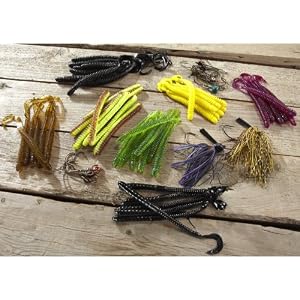 Day-in and day-out, throughout the summer months, it's just tough to beat a plastic worm for largemouth bass. Worms are effective in deep water and shallow water, clear water or stained water. They come in large sizes and small sizes. Some worms have lots of action in the body and tail, others are more subtle in their motion. Plastic worms are just plain versatile fish-catching tools.
Just as worms are available in a variety of shapes and sizes, there are a number of ways they can be rigged. They can be Texas-rigged or Carolina-rigged. They can be hooked up weightless, weedless, or both. Of all the ways they can be rigged however, simply threading a plastic worm on a jighead is perhaps the most popular throughout much of the Midwest because it is so effective.
Here's How You Can Catch Bass on Jigworms
An eight ounce jighead is probably the most widely used size. The size casts well and sinks at about the right speed most of the time. Sometimes, like when the bass are suspended along the weedline, a sixteenth ounce head will be better. Lip-stick and Buck-Shot Rattle jigs are both good heads to try.Throughout the summer, a seven inch worm will be really good. When conditions get tough, go with a four inch worm; when the bite is hot, go to a ten incher. On a recent Midwest fishing trip, the biggest bass came on ten inch worms.
When the bass are active, or in stained water, a worm with lots of action will generally trigger more strikes. There is a new worm out called the Sqwormer that was designed for maximum action. It seems to have more action than similarly constructed worms and has been fooling a lot of fish.
Six pound test XT line is great with jigworms, but sometimes it works well to go a tad heavier, maybe up to eight pound test. The eight pound test line is a little larger in diameter, which causes the jig to fall slower. The heavier line also allows us to put more pressure on the fish and get them away from the weedline. If you're concerned about the heavier line being more visible to the fish, try Vanish line. This is a new line that is virtually invisible to the fish.
Jigworms are Great for Largemouth Bass
But they will also take lots of walleyes, crappies, northern pike, even muskies if they're around. Get a selection of worms in various sizes and shapes in purple, black, blue, and red shad. There are other colors that do a good job also, but these will get you started. Then get out on the weedline, rig up a jigworm, and start casting. If you have done this before, you know how productive this technique can be. If you haven't, you will be in the process of learning a new technique that will help you land more fish throughout the summer. Posted in: Fishing,Fishing Lures


0 comments:
Post a Comment